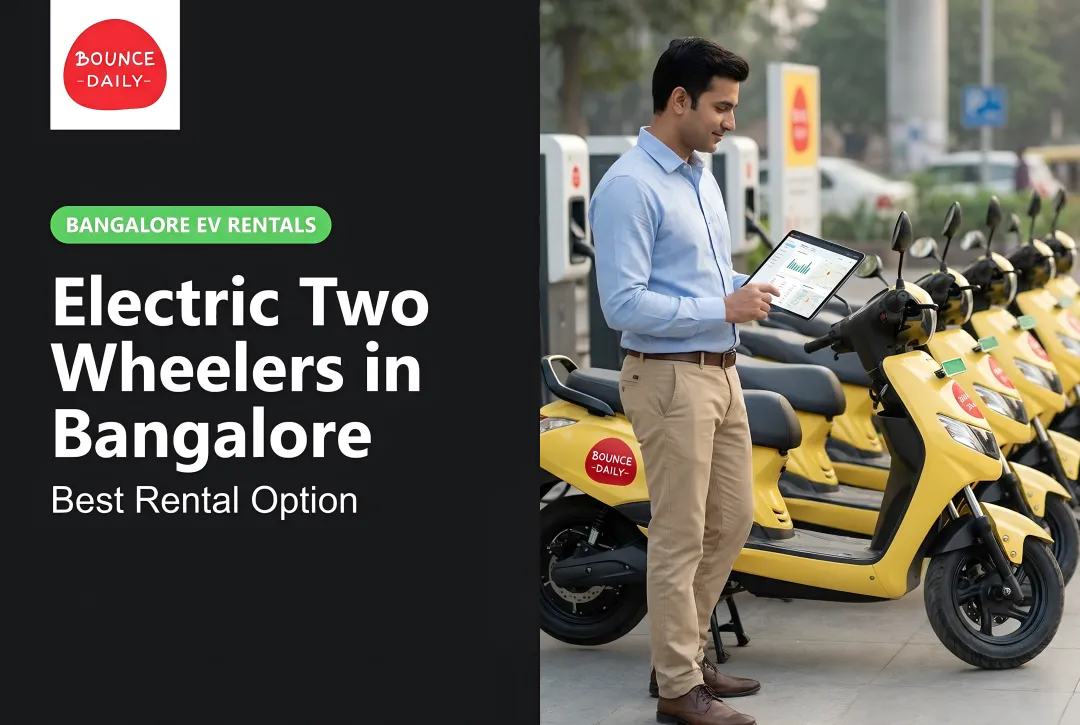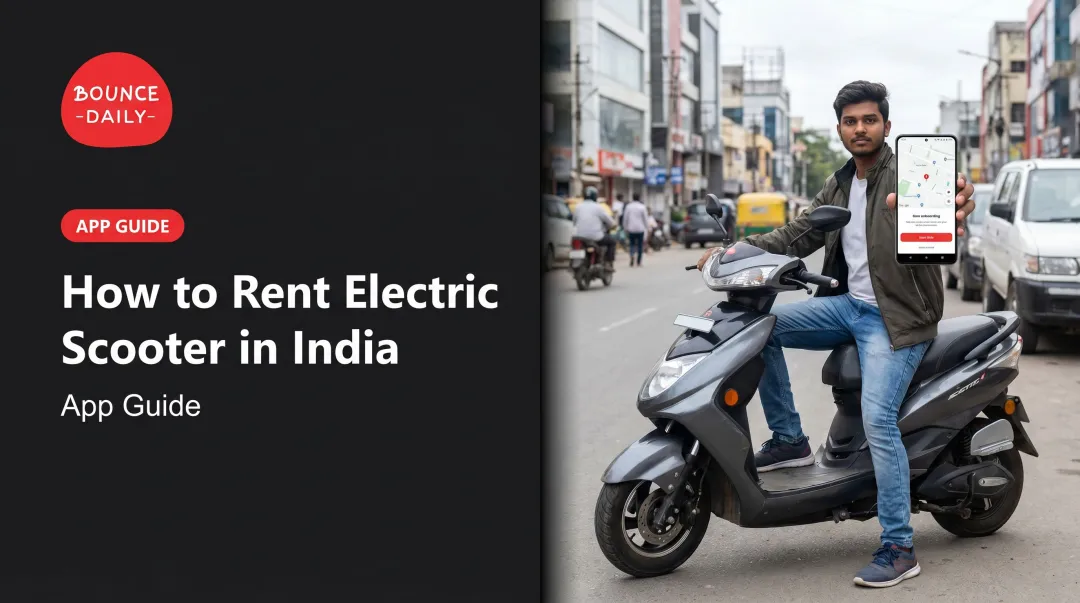
Electric scooter rentals are changing this equation. This guide covers everything you need to know: how rentals work, what to look for in a rental service, actual costs in Bengaluru, and how to get started — all written for daily commuters and gig workers navigating Indian cities.
Key Takeaways
- Electric scooter rentals cost approximately 40% less per kilometre than petrol bikes
- Zero upfront investment — rent from ₹3,500–5,500 monthly with instant digital onboarding
- Low-speed variants (under 25 km/h) require only Aadhaar for identity verification (driving licence assistance (available for a nominal ₹200-₹230 fee) at our hub — visit us or check our app to know more)
- Swappable batteries eliminate range anxiety during long delivery shifts
- Choose between high-speed and low-speed variants — each built around real urban India riding conditions
Why Urban Commuters Are Making the Switch to Electric Scooter Rentals
Urban commuting in India means daily travel within a city for work, deliveries, or errands — typically 5-25 km through congested zones. In Bengaluru, this reality has become particularly challenging.
The cost burden is real. Petrol in Bengaluru currently sits at ₹102.92 per litre as of May 2026. For someone commuting 30 km daily on a petrol two-wheeler averaging 45 km/litre, that's roughly ₹2,400-3,000 monthly just on fuel. Add maintenance, insurance, and the stress of breakdowns, and the total cost of ownership for petrol two-wheelers reaches ₹2.46 per kilometre.
Traffic makes it worse. Bengaluru's average congestion level hit 74.4% in 2025, with a 10 km drive taking 36 minutes on average. Commuters lose 168 hours annually — seven full days — sitting in rush-hour traffic. Evening commutes hit 115% congestion, meaning travel takes more than double the free-flow time.
Electric scooters cut through both problems directly:
- Lower per-km energy cost at ₹1.48/km versus ₹2.46/km for petrol
- Zero emissions and no fuel station stops
- Easy lane navigation through traffic jams
- No parking hassles compared to cars or bulky vehicles
Those savings explain why the rental model is gaining ground. Young professionals and gig workers increasingly prefer renting over owning in India's current economic climate — no depreciation, no insurance burden, no EMI pressure. For delivery partners working irregular hours, rentals provide reliable transport without the financial risk of a purchase.
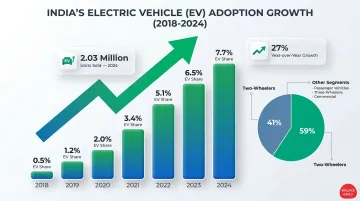
The numbers back this up: India's EV share of total vehicle sales jumped from 0.5% in 2018 to 7.7% in 2024, with 2.03 million units sold last year alone — 27% year-on-year growth. Two-wheelers account for 59% of all EV sales, a clear signal that urban riders are already moving in this direction.
Rental vs. Owning an Electric Scooter: Which Makes More Sense?
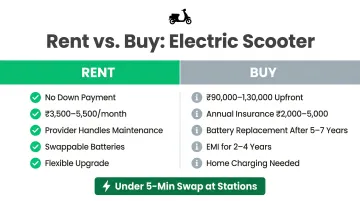
Buying an electric scooter in India means clearing a significant upfront cost. Entry-level to mid-level models range from approximately ₹90,000 to ₹1,30,000 ex-showroom, with the Ola S1 X starting around ₹89,957 and the TVS iQube at ₹1,13,245. On-road prices climb further once registration, insurance, and accessories are added.
Rentals cut through that barrier entirely — monthly plans start from ₹3,500–5,500, with no down payment. But the upfront price is only part of the ownership picture. Ongoing costs stack up quickly:
- Loan EMIs for 2-4 years (typically 80% financing after a 20% down payment)
- Annual insurance: ₹2,000–5,000 for electric two-wheelers
- RTO registration charges (one-time, though EV buyers qualify for FAME II and state-level subsidies)
- Battery replacement after 5-7 years — one of the largest long-term expenses
- Periodic servicing, even with fewer moving parts than petrol bikes
With rentals, the provider handles all maintenance, tracking, and fleet management. You ride, return, and don't worry about breakdowns or repair bills.
Who Should Rent vs. Buy?
Rent if you:
- Work irregular hours or seasonal gig work
- Are new to EVs and want to test before committing
- Don't have home-charging infrastructure or live in a rental property
- Need a reliable vehicle without financial risk
- Cover moderate daily distances (20-40 km)
- Want flexibility to swap or upgrade scooter models
Buy if you:
- Commute very high daily distances (50+ km) long-term
- Have stable income and home-charging setup
- Plan to keep the vehicle 5+ years to recover upfront costs
- Qualify for state EV subsidies that reduce purchase price significantly
For gig workers specifically, swappable battery infrastructure makes a real difference. During a 12-hour delivery shift, you can exchange a depleted battery for a fully charged one in minutes at a swap station — no charging breaks, no downtime. Bounce Daily's low-speed variant covers 85 km per charge with swappable batteries, while the high-speed variant offers 70 km with both chargeable and swappable options.
What to Look for in an Affordable Electric Scooter Rental Service
Pricing Structure and Flexibility
Check these factors before committing:
- Plan options: Daily, weekly, and monthly rates — longer commitments typically offer better per-day pricing
- Hidden charges: Security deposit amounts, per-km overage fees, late return penalties, or pausing fees
- True daily cost: Calculate the monthly rate divided by 30 days, then compare against your daily petrol bike running cost (around ₹80-100 for 30 km)
Example: A ₹4,500 monthly rental equals ₹150 per day. For 30 km daily commute, that's ₹5 per km versus ₹7-8 per km on a petrol bike — meaningful savings even before factoring in maintenance.
Battery Range and Charging Options
Battery range per charge matters for urban commutes. A scooter with only 50 km range forces mid-day charging stops, which cuts into productive riding hours for delivery riders.
Swappable batteries solve this directly. Instead of waiting 3-4 hours to charge, you exchange a depleted battery for a fully charged one in under 5 minutes at swap stations. For full-day riders covering 60-80 km, that turnaround time matters.
Bounce Daily addresses this with both chargeable and swappable battery options — the high-speed variant offers both, while the low-speed variant uses exclusively swappable technology for maximum uptime.
Vehicle Variant Options
Look for services offering multiple scooter variants tailored to different needs:
Low-speed variant (25 km/h or below):
- Requires only Aadhaar for identity verification. driving licence assistance (available for a nominal ₹200-₹230 fee) is available at our hub — visit us or check our app to know more
- Ideal for new riders, students, and those seeking driving licence assistance (available for a nominal ₹200-₹230 fee) at our hub
- Often priced lower than high-speed models
- Sufficient for dense urban areas with lower speed limits
High-speed variant (above 25 km/h):
- Requires valid driving license (MCWOG category)
- Better for longer commutes or faster delivery routes
- Higher range and performance
Bounce Daily's high-speed variant reaches 55 km/h with 70 km range, while the low-speed version tops out at 25 km/h but offers 85 km range — each built around a specific commuter need.
Onboarding and Verification Process
Traditional vehicle rentals mean paperwork, in-person document checks, and waiting days to get on the road. Digital verification cuts that down to hours.
Efficient platforms offer:
- Aadhaar-based digital identity verification
- Driving license upload and instant verification (for high-speed variants)
- App-based onboarding completed in hours, not days
- No in-person visits required for document submission
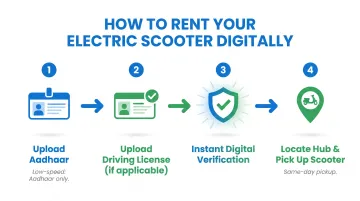
Bounce Daily's digital process works like this: upload Aadhaar card and DL (if applicable), get verified instantly, locate the nearest hub through the app, and pick up your scooter — all within the same day.
Customer Support and Fleet Quality
Commuters shouldn't bear the risk of vehicle downtime. Check whether the provider:
- Handles all maintenance and servicing centrally
- Offers replacement vehicles if your scooter breaks down
- Has responsive customer support (phone, chat, or app-based)
- Maintains fleet quality with regular inspections
Bounce Daily manages fleet maintenance, tracking, and uptime support, ensuring gig workers don't lose earning time due to mechanical issues.
How to Rent an Electric Scooter in Your City: Step-by-Step
Step 1 — Choose a Rental Plan
Evaluate daily, weekly, or monthly plans based on how often you ride. A quick calculation goes a long way:
- 25+ riding days per month → monthly plans offer the best per-day value
- Occasional or weekend-only use → daily or weekly rates are more flexible
- New to renting → start with a daily plan to test the route before committing
Step 2 — Complete Digital Verification
For low-speed variants (under 25 km/h):
- Aadhaar card upload for identity verification
- driving licence assistance (available for a nominal ₹200-₹230 fee) at our hub - visit us or check our app to know more
- Verification typically completes within minutes
For high-speed variants (above 25 km/h):
- Aadhaar card for identity
- Valid driving license (MCWOG category) mandatory
- Both documents uploaded through the app
- Instant digital verification via government databases
Platforms like Bounce Daily process verification instantly, allowing you to rent the same day you sign up.
Step 3 — Pick Up the Scooter and Ride
Before riding off, check:
- Battery level — ensure it's adequately charged for your planned route
- Tyre condition — look for proper inflation and no visible damage
- Brake function — test both front and rear brakes
- Lights and indicators working
If your service offers battery swapping:
Locate swap stations through the app before starting your shift. Swap stations are typically marked on the map with real-time battery availability. The swap process takes under 5 minutes: remove the depleted battery, insert a fully charged one, and continue riding. Because the battery is part of the rental, you pay nothing extra per swap — the cost is baked into your plan, keeping your daily fuel spend predictable.
Smart Tips to Keep Your Rental Costs Low
Opt for Weekly or Monthly Plans if Commuting Daily
Per-day costs drop significantly with longer commitments. Based on pricing available from platforms operating in Bengaluru:
- Yulu's pay-per-use: ₹5 base + ₹2.5 per minute
- Yulu's 30-day plan: ₹3,499
- Monthly subscriptions from competitors: ₹3,600-5,500
A ₹3,500 monthly plan equals ₹116 per day versus potentially ₹150-200 for daily rentals — that's 25-40% savings over the month.
Use the Low-Speed Variant for Lower Daily Costs
For commuters, the low-speed variant typically costs less. Bounce Daily's low-speed option covers 85 km on a single swap and offers more range than the high-speed version, making it a practical choice for first-time riders or shorter urban routes. driving licence assistance (available for a nominal ₹200-₹230 fee) is available at our hub — visit us or check our app to know more.
Plan Efficient Routes to Preserve Battery
Electric scooters have fixed battery range. Efficient routing preserves charge and avoids mid-day swaps.
Use navigation apps optimized for Indian cities:
- Google Maps dominates with 90%+ consumer navigation share and real-time traffic data
- Mappls (MapmyIndia) offers high-precision maps with EV charging station information
- Ola Maps launched in July 2024 for captive Ola ecosystem users
Stop-and-go traffic drains charge noticeably faster than open roads — a smoother route can add meaningful kilometers to your range.
Understand the Cost Comparison
Electric two-wheelers deliver approximately 40% lower per-km total cost compared to petrol two-wheelers — ₹1.48/km versus ₹2.46/km. For a 30 km daily commute:
- Petrol bike: ₹73.80 per day = ₹2,214 per month
- Electric scooter rental: ₹44.40 per day (at ₹1.48/km) + rental fee ≈ ₹1,850 total per month
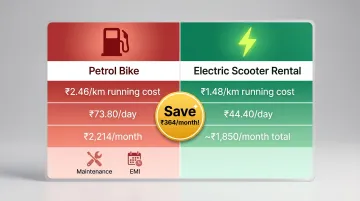
That's roughly ₹364 back in your pocket each month — without a single maintenance bill or EMI to worry about.
Frequently Asked Questions
What does urban commuting mean?
Urban commuting refers to the regular daily travel people undertake within a city or town for work, errands, deliveries, or other activities. It typically covers short to medium distances (5-30 km) using personal vehicles, public transport, or shared mobility services like electric scooter rentals.
What is the meaning of commuter town?
A commuter town is a residential area located near a larger city where many residents live but travel daily to the main city for work. These towns rely on good transport links to bridge the distance between home and workplace.
Is a driving license required to rent an electric scooter in India?
It depends on the scooter variant. High-speed electric scooters above 25 km/h require a valid driving license (MCWOG category) under Indian motor vehicle regulations. For low-speed variants at 25 km/h or below with motor power under 250W, driving licence assistance (available for a nominal ₹200-₹230 fee) is available at our hub — visit us or check our app to know more.
How much does it cost to rent an electric scooter per day in Bengaluru?
Pay-per-use models charge around ₹5 base + ₹2.5 per minute, while daily plans range from ₹120-200 depending on the provider. Monthly subscriptions (₹3,500-5,500) bring the effective daily cost down to ₹116-183 — the better choice for regular commuters.
Are electric scooter rentals cheaper than running a petrol bike daily?
Yes. Electric two-wheelers cost ₹1.48 per km versus ₹2.46 per km for petrol bikes according to CEEW research — a 40% reduction in running costs. Factor in lower maintenance expenses and the savings add up fast for daily riders.
What happens if the scooter battery runs low during my commute?
With swappable battery services, you exchange a depleted battery for a fully charged one at a swap station in under 5 minutes — no long waiting, no interrupted commute. If you cover 60+ km daily, prioritize rental providers with swappable battery infrastructure over charge-only options.