
Get it wrong, and you inherit more downtime, more manual paperwork, missed maintenance windows, and higher driver-risk exposure. Get it right, and you gain real visibility into vehicle utilisation, safety, and operational control.
This guide walks through a practical comparison framework: defining the software category correctly, identifying essential and EV-specific capabilities, calculating total cost and implementation effort, and validating your shortlist through a live pilot before you sign anything.
Key Takeaways
- Treat fleet software as one system for tracking, maintenance, drivers, safety, compliance, and cost control.
- Match platforms to vehicle type, fleet size, routes, driver model, EV needs, and existing tools.
- Price total cost of ownership: hardware, integrations, training, and contract terms beyond the subscription.
- Verify battery, charging, swapping, and range data for EV fleets before you sign.
- Score shortlisted vendors on a weighted checklist, then pilot with live fleet data.
What Is Fleet Management Software?
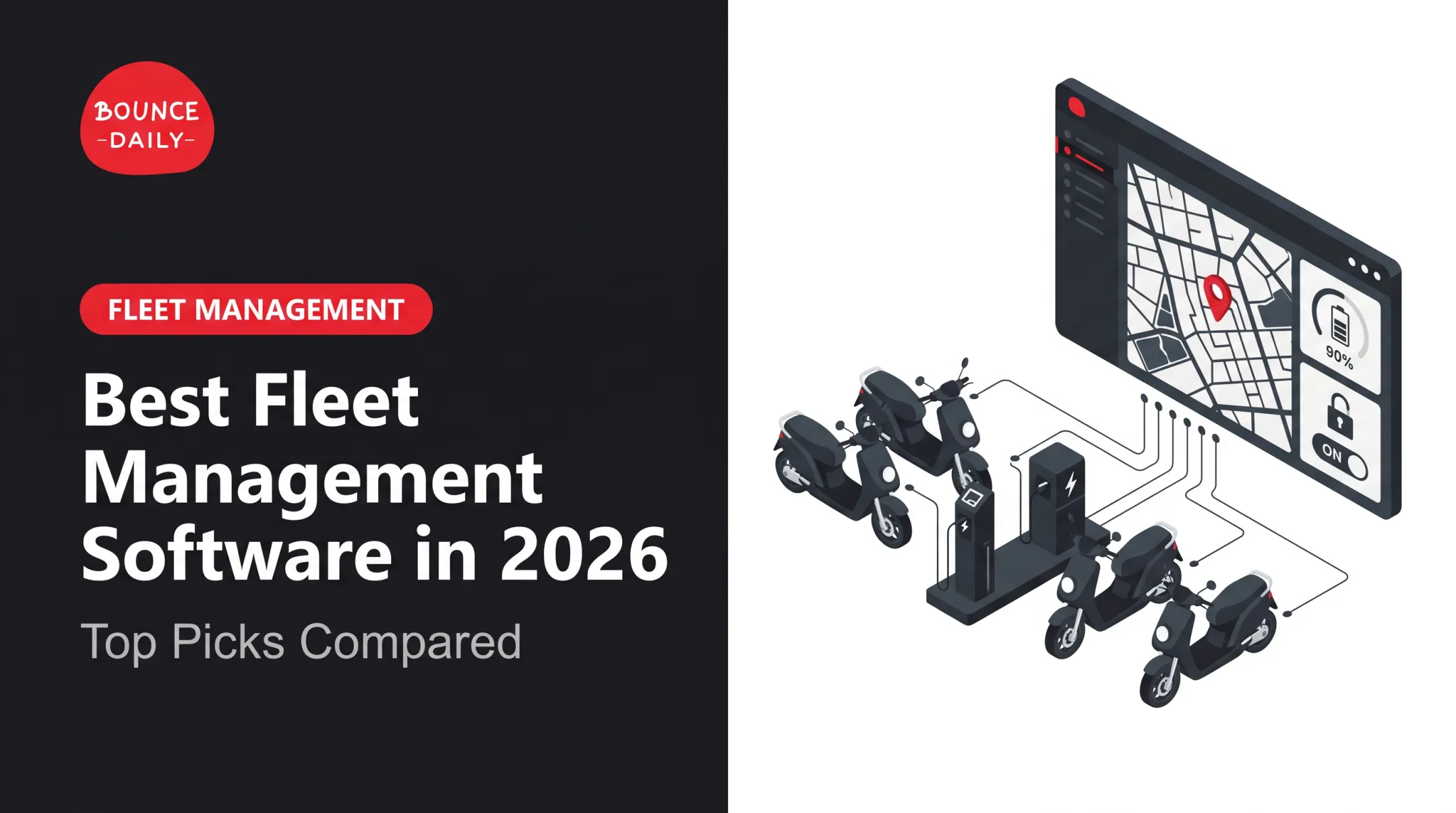
Fleet management software is a digital platform that pulls vehicle, driver, route, maintenance, safety, and performance data into one system. Instead of checking five spreadsheets and three WhatsApp groups, a manager sees everything — and acts on it — from a single dashboard.
Vendors blur these categories constantly, so the labels matter:
- GPS tracking software shows real-time location and movement — nothing more.
- Fleet management software covers vehicle location, driver behaviour, fuel, maintenance scheduling, job management, and compliance in one application, according to Teletrac Navman's definition.
- Transport management systems (TMS) focus on dispatching, billing, and inbound/outbound shipping workflows rather than the vehicles themselves.
If a vendor's "fleet management platform" is only a tracking dashboard with a maintenance tab added on, treat that as a real product gap.
Core Components of Fleet Management Software
The useful platforms connect data capture, alerts, workflows, and permissions — they don't just plot pins on a map. Four components matter most:
- Location and routing — live location, route history, geofencing, and trip data. Test accuracy, refresh rate, map coverage, and offline behaviour in actual Indian traffic and connectivity conditions, not just a polished sales demo.
- Vehicle and asset records — registrations, insurance, service history, odometer readings, inspections, and preventive-maintenance reminders.
- Driver and field-team workflows — task assignment, mobile checklists, incident reporting, and role-based access for managers, riders, technicians, and franchise partners.
- Analytics and integrations — utilisation, idle time, downtime, maintenance cost, battery or energy data, and connectivity with accounting, payroll, or dispatch tools.
Why Fleets Rely on Fleet Management Software
Each component should map to a clear operational result:
- Higher vehicle availability
- Fewer missed services
- Faster incident response
- More accurate dispatch
Verizon Connect's 2025 survey of 543 fleet respondents found that GPS tracking improved efficiency for 62% of respondents and reduced idling for 34%. The same survey reported an average maintenance-cost reduction of 16%, with similar drops in fuel and labour costs.

These are vendor-sponsored figures, not India-specific benchmarks, yet the direction matches what most fleet managers see in practice.
For electric fleets — including two-wheeler rental and delivery fleets common across Indian cities — the case goes further. Software must surface state of charge, charging or swapping events, range, battery health, and energy use. A scooter sitting idle at a charge or swap point is lost trips and lost revenue.
None of this matters if drivers won't use it. Prioritise mobile usability, simple workflows, and low-friction onboarding over feature depth that nobody touches.
What to Consider When Choosing the Best Fleet Management Software
Before requesting a single demo, build a weighted scorecard. List your must-have, useful, and unnecessary capabilities, and weight them by the operational problems currently costing you the most: downtime, admin hours, safety incidents, or whichever hits your P&L hardest.
Fleet Fit and Scalability
Check whether the platform genuinely supports your vehicle mix (electric scooters, motorcycles, cars, vans, trucks, or non-powered assets), plus your fleet size, multiple depots, and franchise or contractor structures.
Ask vendors to demonstrate, live:
- How vehicles and users get added, grouped, and deactivated
- How reassignment works when a driver or rider changes
- Minimum fleet sizes, user limits, and plan restrictions that could box you in later
Tracking, Routing, and Operational Visibility
Evaluate GPS accuracy, update frequency, route replay, geofencing, and dispatch alerts using sample routes in weak-connectivity areas, not just a curated sales demo in a well-covered office.
For two-wheeler and last-mile operations specifically, confirm the platform handles:
- Short trips with frequent stops
- Shared vehicles and rapid rider reassignment
- Real-time reallocation during peak delivery windows
Maintenance, Safety, and Compliance
Verify preventive-maintenance rules based on time, distance, or usage, plus digital inspections, work orders, and document-expiry alerts. Compare safety tools like speeding and harsh-braking alerts, but treat vendor outcome claims with a healthy dose of scepticism until you've tested them yourself.
On compliance, confirm what's actually built in versus what requires manual workarounds:
- AIS-140 device requirements apply specifically to public transport vehicles, including buses and taxis, not automatically to every private delivery van or scooter
- Parivahan's Form 38 fitness certificate includes an expiry field your software should track
- Third-party liability insurance is mandatory for all vehicles on Indian roads, per IRDAI
EV and Energy Management
This is where generic "EV-ready" claims fall apart fastest. Ask specifically whether the platform ingests data from the vehicle, battery-management system, charging network, or swapping infrastructure, and whether it reports state of charge, battery health, and energy usage at the individual vehicle level.
According to NITI Aayog and ICCT's 2022 battery-swapping report, swap systems using IoT and CAN protocols can continuously monitor battery performance, flag faults before a swap, and support centralised battery management across a hub network. That's the bar software should meet.

Compare how vendors handle:
- Alerts for low charge, abnormal energy use, and battery faults
- Vehicles unavailable due to charging or swap delays
- A live demo using your actual EV models, not a generic reference fleet
Total Cost, Contracts, Integrations, and Implementation
Subscription price is the tip of the iceberg. According to Geotab's cost guide, total cost includes per-vehicle fees, hardware, installation, fleet size, feature tier, integrations, data migration, training, and contract terms.
Build a complete cost model covering:
- Per-vehicle or per-user fees, plus telematics hardware and installation
- Onboarding, training, and premium module costs
- API access, data export terms, and renewal price increases
- Cancellation clauses: read these before you sign, not after
Also confirm integration support with accounting, payroll, dispatch, charging, and workshop systems, and ask directly how your existing vehicle and maintenance data will be migrated.
Usability, Support, Security, and Proof of Value
Have actual managers, riders, and technicians complete common tasks in the app, not your IT team. Record how many steps it takes, how many errors occur, and how the app performs on ordinary field devices.
Check support coverage for your operating hours, escalation paths, and whether field issues get resolved without long email chains. On security, confirm encryption, role-based permissions, audit logs, and where vehicle and rider data is hosted.
Before purchase, define success metrics you'll actually measure:
- Vehicle availability and maintenance completion rates
- Dispatch time and route adherence
- Driver adoption and administrative hours saved
Then compare baseline numbers against pilot results using documented data, not vendor promises.
How Bounce Daily Can Inform Fleet Software Requirements
Bounce Daily’s live rental operation is a practical lens for setting fleet software requirements. Bounce Infinity re-entered the EV rental segment in April 2025 with Bounce Daily, a service built for gig workers in e-commerce and food delivery.
A gig-worker rental model like this puts specific software questions front and centre:
- How fast can a new rider be verified and start earning?
- How is a vehicle reassigned when a rider swaps shifts or drops off?
- How is battery readiness tracked across a hub network running 8-12 hour shifts?
Bounce Daily's operational characteristics map directly onto the evaluation checklist above. The service offers affordable electric scooter rentals with chargeable and swappable batteries, company-handled fleet maintenance, and a quick digital onboarding process using Aadhaar KYC. Riders can typically get verified and start renting the same day.
That combination should prompt anyone evaluating fleet software to specifically test:
- Battery status visibility at the vehicle level
- Vehicle availability and turnover reporting as riders rotate
- Low-documentation onboarding workflows for partners and franchise operators
Bounce Daily reports 30M+ kilometres driven and 10K+ CO2 tons avoided on its own site. These are company-provided milestones, not independently verified software-performance metrics. Treat them as useful context, not proof of ROI for any particular platform.

Conclusion
The best fleet management software in 2026 is the one that fits your vehicles, people, routes, and compliance needs, and still scales as the fleet grows. A long feature list alone does not make the case.
Before you commit:
- Shortlist two or three platforms
- Score each against your weighted requirements
- Get written commercial terms
- Run a pilot on real vehicles, drivers, and maintenance events
After go-live, review adoption, data quality, downtime, and total cost on a fixed cadence. Fleets change, and the software stack should keep pace.
Frequently Asked Questions
What is fleet management software?
It's a platform that centralises vehicle location, maintenance, driver operations, safety, documentation, and reporting in one system. Unlike GPS-only tracking, it adds workflows that let managers act on data, not just view it.
How much does fleet management software cost in India?
Pricing varies by vehicle count, user seats, feature tier, hardware, connectivity, and contract terms. Always request a complete written quote covering installation, integrations, and renewal terms rather than comparing headline subscription prices alone.
What features should I compare in fleet management software?
Compare tracking accuracy, maintenance scheduling, driver or rider workflows, safety tools, compliance support, integrations, security, scalability, and total cost of ownership. Feature checklists alone won't tell you how well a platform performs under real conditions.
Is fleet management software useful for electric vehicle fleets?
Yes. EV fleets need visibility into state of charge, range, battery health, charging or swapping events, and energy use: data that standard GPS tracking doesn't capture at all.
What is the difference between GPS tracking and fleet management software?
GPS tracking shows location and movement only. Fleet management software adds maintenance scheduling, driver workflows, safety tools, compliance tracking, and reporting on top of that location data.
How should I test fleet management software before buying?
Run a time-limited pilot using real vehicles, users, and routes under actual connectivity conditions. Compare pilot results against predefined success metrics like uptime, dispatch time, and driver adoption before signing a contract.