Introduction
If you're running petrol-powered two-wheelers or three-wheelers for delivery or commercial use in India, the clock is ticking. India's electric vehicle policy shift has moved from aspiration to action, with several states drafting concrete deadlines to phase out petrol vehicle registrations for commercial fleets. Delhi's draft EV Policy 2026–2030 proposes banning new petrol two-wheeler registrations from April 1, 2028, and requiring electric-only three-wheeler registrations from January 1, 2027. For delivery aggregator fleets, the timeline is even tighter—no new petrol or diesel vehicles from 2026.
Waiting to act means regulatory roadblocks and rising operating costs. Fleet operators who delay the transition risk:
- Shrinking options for adding or replacing vehicles as petrol registrations close
- Losing government contracts that require green fleet compliance
- Missing subsidies and incentives that are already declining year by year
This guide covers what India's zero emission vehicle (ZEV) mandate actually is, which vehicles qualify, what it means operationally and financially for fleet operators, and how to start transitioning before the deadlines force your hand.
Key Takeaways
- India drives EV adoption through FAME subsidies, PM E-Drive, EV30@30 goals, and state-level policies—no single mandate law exists yet
- Two-wheelers and three-wheelers for last-mile delivery face the earliest electrification deadlines, with some cities banning petrol registrations by 2027-2028
- Fleet operators in restricted cities will be unable to register new petrol vehicles—those who haven't planned a switch will be caught off guard
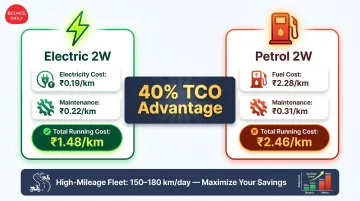
- Electric two-wheelers cost Rs 1.48/km versus Rs 2.46/km for petrol—a 40% total cost of ownership advantage for delivery fleets
- PM E-Drive subsidies of up to Rs 5,000 per electric two-wheeler run only until July 2026—state incentives are available now but won't last
What Is India's Zero Emission Vehicle Mandate?
India doesn't have a single law called the "ZEV mandate." Instead, the country has built a technology-forcing policy framework through a combination of subsidy schemes, emission norms, and electrification targets that collectively function as an effective mandate in practice.
A zero emission vehicle produces no tailpipe emissions during operation. In India's current market, this primarily means battery electric vehicles (BEVs)—electric two-wheelers, three-wheelers, and commercial vehicles. Hydrogen fuel cell vehicles technically qualify as well, but remain rare and commercially unavailable at scale for delivery fleets.
India's Policy Journey
India's EV policy has evolved through four distinct phases — each building on the last, with subsidies gradually shifting from incentive-heavy to deadline-driven.
| Scheme | Period | Outlay | Key Outcome |
|---|---|---|---|
| NEMMP 2020 | Pre-2015 | — | National EV roadmap; launched FAME scheme |
| FAME I | 2015–2019 | Rs 895 crore | ~2.8 lakh vehicles supported; 520 charging stations |
| FAME II | 2019–2024 | Rs 11,500 crore | 16.7 lakh EVs, 9,159 charging stations |
| PM E-Drive | 2024–present | Rs 10,900 crore | 22.12 lakh EVs sold as of January 2026 |
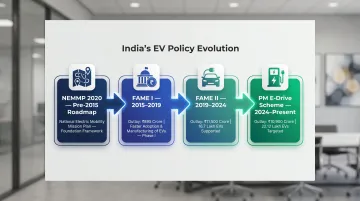
FAME II originally offered Rs 15,000 per kWh for e-2Ws (capped at 40% of vehicle cost), but subsidy rates were cut to a flat 15% of ex-factory price from June 2023. PM E-Drive, notified September 29, 2024, continues that trend of tightening support.
Current subsidy timeline for fleet operators:
- FY 2025-26: Rs 2,500/kWh, capped at Rs 5,000 per e-2W
- July 31, 2026: e-2W subsidies expire
- E-rickshaw/e-cart subsidies run until March 31, 2028
India also supports the global EV30@30 campaign — targeting 30% of new vehicle sales to be electric by 2030, endorsed by NITI Aayog across all vehicle segments including two- and three-wheelers.
How India's Approach Differs from US/UK Models
Unlike California's ZEV regulation or the UK's explicit ICE phase-out date, India hasn't issued a single blanket ZEV law. Instead, declining subsidies, state-level registration restrictions, and BS-VI emission norms combine to create the same practical pressure on manufacturers and fleet operators to switch.
One clarification worth noting: Corporate Average Fuel Economy (CAFE) regulations apply only to four-wheelers in India. Two-wheelers face BS-VI tailpipe emission standards — not fleet-average fuel economy mandates — which means the electrification pressure on delivery fleets comes through subsidy deadlines and state bans rather than fuel economy rules.
Vehicle Categories with Aggressive Targets
Two-wheelers and three-wheelers face the earliest and most stringent electrification targets, making fleet operators in last-mile delivery, food delivery, e-commerce logistics, and ride-hailing the most urgently affected group.
Major delivery platforms have already committed:
- Blinkit: 80% of Gurgaon fleet already electric; targeting 100% EV deliveries by 2030
- Swiggy Instamart, Zomato, Flipkart: All pledged 100% electric last-mile fleets by 2030
State Government Acceleration
State governments are moving faster than central policy. Delhi's draft policy proposes banning petrol two-wheeler registrations from April 1, 2028, with three-wheeler electric-only registrations starting January 1, 2027.
Maharashtra targets 40% of new two-wheeler and three-wheeler sales to be electric by 2030, with 50% of aggregator fleets required to transition. Karnataka offers infrastructure incentives including 25% capital subsidy for charging stations (capped at Rs 10 lakh) and 25% subsidy for battery swapping stations (capped at Rs 3 lakh per station).
Which Vehicles Qualify as Zero-Emission Vehicles Under India's Policy?
Battery Electric Vehicles (BEVs)
Under PM E-Drive, eligible vehicles must be battery electric vehicles powered exclusively by an electric motor with energy from a traction battery. Only vehicles registered under the Central Motor Vehicles Rules (CMVR) qualify for subsidies.
High-Speed vs Low-Speed Electric Two-Wheelers
This distinction directly impacts fleet composition decisions and subsidy eligibility:
Low-Speed e-2W:
- Motor power under 250W, top speed up to 25 km/h
- Classified as non-motorized vehicles under CMVR
- Not eligible for FAME or PM E-Drive subsidies
High-Speed e-2W:
- Top speed above 25 km/h
- Requires driving licence and RTO registration
- Only high-speed, registered e-2Ws qualify for PM E-Drive subsidies
For delivery-grade commercial use, fleet operators must use high-speed registered vehicles to comply with regulations and access subsidies.
PHEVs, Hydrogen, and Vehicles Outside ZEV Scope
Several vehicle types fall outside the current ZEV subsidy framework — or remain too early-stage for commercial deployment:
- Plug-in hybrids (PHEVs): FAME II included "strong hybrids" for four-wheelers, but two-wheeler and three-wheeler subsidies cover battery electric vehicles only. PHEVs don't apply for 2W/3W fleet operators.
- Hydrogen fuel cell vehicles: Agastya Hydrogen announced India's first green hydrogen-powered three-wheeler in October 2025, but no commercial fleet units are available yet.
- CNG three-wheelers: Not classified as ZEVs because they produce tailpipe emissions. Delhi's draft policy goes further — it proposes banning both petrol and CNG two-wheeler registrations from 2028.
- Heavy trucks and buses: Covered under separate electrification timelines, with ₹4,391 crore allocated under PM E-Drive specifically for e-buses.
What the ZEV Mandate Means for Fleet Operators
Compliance Pressure and Registration Restrictions
Fleet operators who don't begin transitioning now face a shrinking window to add or replace petrol vehicles:
Current State-Level Restrictions:
| City/State | Vehicle Type | Restriction | Deadline | Status |
|---|---|---|---|---|
| Delhi | Two-wheelers | Ban on new petrol/CNG registrations | April 1, 2028 | Draft policy |
| Delhi | Three-wheelers | Only electric registrations | January 1, 2027 | Draft policy |
| Delhi | Delivery aggregator fleets | No new petrol/diesel vehicles | 2026 | Draft policy |
| Maharashtra | 2W and 3W | 40% new sales electric; 50% aggregator fleets | 2030 | Active policy |
Once these policies are finalized, operators will be unable to legally register new petrol vehicles, leaving no gradual on-ramp for late movers.
Total Cost of Ownership (TCO) Shift
CEEW research (June 2025) found electric two-wheelers cost ₹1.48/km versus ₹2.46/km for petrol—a 40% TCO advantage.
Cost breakdown per kilometre:
- Electricity: ₹0.19/km (at ₹7.1/kWh residential rate)
- Petrol fuel: ₹2.28/km (at ₹102.8/litre)
- EV maintenance: ₹0.22/km
- Petrol maintenance: ₹0.31/km
For delivery fleets with high daily mileage (150-180 km/day), operating cost savings range from ₹1.5-2/km for EVs versus ₹4/km for petrol—40-60% savings with payback periods as short as two years.
Electric three-wheelers show even stronger economics: ₹1.28/km versus ₹2.35/km for CNG or ₹3.21/km for petrol.
Fleet Procurement Strategy Changes
The ZEV mandate changes how fleet operators plan across every function:
- Align replacement cycles with EV availability and subsidy timelines before petrol options close
- Budget upfront for charging infrastructure or battery swap access alongside vehicle costs
- Restructure delivery partner contracts around EV rental or lease arrangements
- Run pilots to validate real-world range and charging logistics before committing the full fleet
The Gig Worker Dimension
For platforms and fleet operators who supply vehicles to delivery partners, the ZEV mandate shifts electrification burden squarely onto the fleet owner rather than individual riders. This has implications for:
- Fleet financing models (higher upfront capital)
- Insurance structures (EV-specific coverage)
- Rental and subscription pricing
- Battery management responsibilities
PUC Exemption Advantage
These operational shifts extend to routine compliance, too. Battery electric vehicles produce zero tailpipe emissions and are exempt from Pollution Under Control (PUC) certification requirements. This removes a recurring cost and rider inconvenience that petrol fleets carry today, cutting administrative overhead across the board.
Key Challenges Fleet Operators Will Face
Upfront Capital Costs
Even with subsidies, replacing a petrol fleet with EVs requires significant capital:
Price comparison (ex-showroom Delhi):
| Model | Type | Price | Range |
|---|---|---|---|
| Hero Splendor Plus | Petrol 2W | ₹76,249 | 500+ km/tank |
| Ola S1 Pro | Electric 2W | ₹1,29,863 | 242 km/charge |
| TVS Orbiter | Electric 2W | ₹95,650 | 158 km/charge |
| Ola S1 Z | Electric 2W | ₹64,343 | 146 km/charge |
The premium for electric ranges from around ₹54,000 (Ola S1 Pro) down to ₹19,000–₹25,000 for entry-level models, though state incentives close the gap further.
Smaller operators and individual franchise partners may struggle to secure financing for these upfront costs, even when the total cost of ownership (TCO) advantage over petrol is clear over time.
Charging and Battery Infrastructure Gaps
Providing reliable charging or battery swap access for a large delivery fleet across a city remains a real-world challenge, especially in areas with unreliable grid power or limited public infrastructure.
Current infrastructure:
- India has around 27,000+ public EV charging stations as of early 2026
- Delhi leads with about 1,967 public stations
- PM E-Drive allocated ₹2,000 crore for additional stations
Fast charging requirements for delivery fleets:
- Must provide around 50 km range in 20 minutes
- A single 6kW fast charger can serve 15-20 two-wheelers per day
Fast charging works for planned stops, but many delivery corridors still lack the density to support full-shift operations. Battery swapping offers a faster alternative where the network exists.
Battery swapping as an alternative:
| Operator | Swap Stations | Cities | Key Metric |
|---|---|---|---|
| Battery Smart | 1,569+ active | Delhi NCR, Mumbai, Bengaluru, Hyderabad | 100M+ swaps |
| Yuma Energy | 2,000+ | 17 cities | 99.9% uptime; 50M+ swaps |
| SUN Mobility | 600+ | Delhi NCR, Bengaluru, Hyderabad | Multi-OEM compatible |
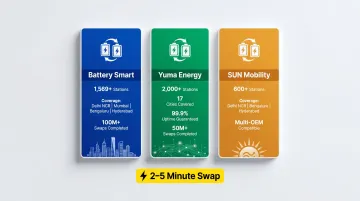
Battery swapping (2-5 minute swap) addresses range concerns but requires proximity to swap networks and subscription costs.
Range and Operational Fit
Current electric two-wheelers offer 120–265 km per charge (ARAI-certified), but real-world range typically runs 70–80% of those figures — a gap that matters most for high-mileage delivery work.
Daily delivery mileage requirements:
- Personal commuters: around 30 km/day
- Commercial delivery riders: 150-180 km/day (5-6x higher)
For heavy-use delivery fleets, mid-shift charging or battery swapping isn't optional — it's a planning requirement. Operators who don't map swap or charge points into their routes will see downtime eat into daily earnings.
Opportunities and Incentives for Fleet Operators
PM E-Drive Subsidies (Active Scheme)
Current FY 2025-26 subsidy: Rs 2,500/kWh, capped at Rs 5,000 per e-2W
Applied as upfront discount via Aadhaar-authenticated e-voucher at dealership. This subsidy halved from Rs 10,000 in FY 2024-25 and will expire July 31, 2026 for e-2Ws.
E-rickshaw/e-cart subsidy: Rs 2,500/kWh, capped at Rs 12,500 (extended to March 31, 2028)
The declining subsidy structure creates urgency: operators who delay transition will face higher net acquisition costs as benefits phase out.
State-Level EV Incentives
Delhi (Draft 2026-2030):
- Year 1 purchase subsidy: Rs 10,000/kWh, capped at Rs 30,000
- Year 2: Rs 6,600/kWh, capped at Rs 20,000
- Year 3: Rs 3,300/kWh, capped at Rs 10,000
- 100% road tax and registration fee exempt (EVs up to Rs 30 lakh, until March 2030)
Maharashtra (2025-2030):
- Up to Rs 10,000 per e-2W; up to Rs 30,000 per e-3W
- 100% road tax exempt; 100% registration fee waiver
- Budget: Rs 1,993 crore for EV ecosystem
Karnataka (Clean Mobility 2025-30):
- No direct purchase subsidy for e-2W
- 100% road tax exempt for e-2W (0% lifetime tax)
- Zero-fee permits for commercial EVs
- 25% capital subsidy for charging stations (cap Rs 10 lakh)
- 25% subsidy for battery swapping stations (cap Rs 3 lakh per station)
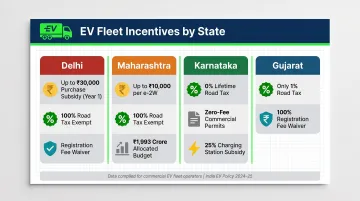
Gujarat:
- Road tax reduced to 1%
- 100% registration fee waiver
- Central PM E-Drive subsidy still applies
Tax Benefits (Section 80EEB)
Section 80EEB of the Income Tax Act allows individuals to claim a deduction of up to Rs 1.5 lakh per year on interest paid on EV loans. This can be claimed each financial year for the loan's duration.
Important limitations:
- Available only for individuals, not companies or partnerships
- Must opt for old tax regime
- Expired for new loans sanctioned after March 31, 2023
Existing qualifying loans can still claim the deduction. This is relevant for individual fleet owners and franchise partners who took EV loans before the deadline.
The Rental and Asset-Light Model Opportunity
Fleet operators don't need to own EVs outright. Rental models remove the upfront capital barrier while enabling immediate compliance with ZEV expectations.
Platforms like Bounce Daily offer EV rental models where gig workers and delivery partners can access electric scooters on a daily or subscription basis. Bounce Daily's franchise model is specifically built for this use case:
- Onboards riders instantly via Aadhaar + driving licence verification — no lengthy paperwork
- Handles vehicle maintenance, tracking, and uptime support for franchise partners
- Connects operators with a steady pipeline of verified delivery partners ready to rent
- Provides training, marketing creatives, and full operational support from day one
Bounce Daily has achieved 30M+ kilometres driven and 10K+ CO2 tons avoided since relaunching in April 2025. Currently operating in Bengaluru, the service is expanding across Indian cities.
Two scooter variants cover different operator needs:
- High-speed: 55 km/h top speed, 70 km range, chargeable and swappable battery (requires licence)
- Low-speed: 25 km/h top speed, 85 km range, swappable battery only, with driving licence assistance (available for a nominal ₹200-₹230 fee) at our hub — visit us or check our app to know more
For operators weighing EV transition costs against tightening mandates, the rental model offers a low-risk entry point — with no fleet ownership, no maintenance overhead, and subsidy deadlines already counting down.
How Fleet Operators Can Start Transitioning Today
Audit Your Current Fleet and Compliance Gap
Start with two assessments:
Map your petrol vehicle mix against applicable ZEV timelines. Identify which categories need replacement first and by when. In Delhi, for example, three-wheelers face the January 2027 deadline, two-wheelers face April 2028, and aggregator fleets face 2026 restrictions.
Calculate remaining useful life of existing petrol vehicles. Vehicles already nearing the end of their service life are natural first candidates for EV transition — no premature write-offs required.
Pilot Before You Scale
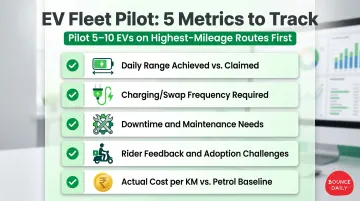
Launch a pilot with 5–10 EVs on your highest-mileage routes first. This validates real-world range, charging logistics, and rider satisfaction before committing capital to full-scale fleet conversion. Track these metrics during the pilot:
- Daily range achieved vs. claimed
- Charging/swap frequency required
- Downtime and maintenance needs
- Rider feedback and adoption challenges
- Actual cost per kilometre vs. petrol baseline
Pilots reduce financial risk and ground procurement decisions in real data, not guesswork.
Explore Asset-Light and Rental Models
Not every operator is ready to buy a fleet outright — and that's a viable position. EV rental platforms let you meet ZEV mandates immediately without upfront capital.
Bounce Daily's franchise model is built for exactly this scenario. It provides a steady flow of verified delivery riders ready to rent, with fleet management covered across training, onboarding, and maintenance. Operators can satisfy compliance requirements now while testing EV economics before committing to ownership.
Frequently Asked Questions
What is the zero emissions mandate?
A ZEV mandate is a government policy requiring a set percentage of vehicles sold or operated to produce zero tailpipe emissions. India implements this through a combination of PM E-Drive subsidies, EV30@30 targets, and state-level policies rather than a single named law, but the effect is the same—accelerating commercial fleet electrification.
Which vehicles qualify as zero-emission vehicles under the zero emission vehicle mandate?
In India's context, qualifying ZEVs are primarily battery electric vehicles (BEVs) including electric two-wheelers and three-wheelers. Hydrogen fuel cell vehicles technically qualify but remain commercially unavailable. Only high-speed, registered e-2Ws (above 25 km/h) are eligible for PM E-Drive subsidies.
Which vehicles are exempted from PUC?
Battery electric vehicles are exempt from PUC (Pollution Under Control) certification in India since they produce no tailpipe emissions. For fleet operators, this removes recurring certification costs and the associated paperwork from day-to-day operations.
Can I claim 80EEB every year?
Section 80EEB allows a deduction of up to Rs 1.5 lakh per year on interest paid on an EV loan, claimable each financial year while the loan remains active. However, only loans sanctioned before March 31, 2023, qualify—new loans taken after that date are not eligible.
What are the penalties for fleet operators in India who don't comply with EV transition requirements?
India does not yet have a single uniform penalty framework for ZEV non-compliance. However, operators in cities with petrol vehicle registration bans (like Delhi's proposed 2027-2028 deadlines) will be unable to register new petrol vehicles in their fleet. Operators may face loss of eligibility for government contracts that require green fleet compliance.
How does the FAME subsidy benefit fleet operators transitioning to EVs?
PM E-Drive provides a direct per-vehicle subsidy on qualifying electric two-wheelers and three-wheelers, reducing acquisition costs upfront. The current subsidy for e-2Ws is Rs 2,500/kWh, capped at Rs 5,000 per vehicle, applied as a discount at the dealership. The scheme expires July 31, 2026.